|
No. 9
Mittwoch, 11. März 2026
|
|
The Intermediality Messenger: Newsletter of the Centre for Intermediality Studies in Graz (CIMIG)
Spring 2026
|
Dear Subscribers:
This issue again emphasizes that events in Graz invite intermedial perspectives and that intermediality research associated with CIMIG continues to be productive. Enjoy the news and, as always, please feel free to send us questions or other input at cimig@uni-graz.at
|
|
|
Intermediality in the Classroom
Classes eligible for the certificate in intermediality this semester are: For a list of MA- and PhD-level classes offered by the Departments of American Studies, English Studies, Arts and Musicology, Romance Studies, and Slavic Studies, all of which contain intermediality-related components, click here.
|
|
|
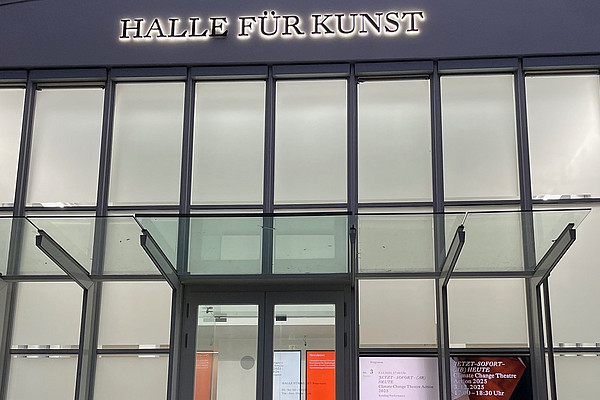
On December 3, 2025, an audience of about 80 people gathered at Halle für Kunst to see the Climate Change Theatre Action (CCTA) performance of four short plays by Alister Emerson, Jordan Hall, Marcia Johnson, and Tira Palmquist, and to engage in a lively discussion with the students of Nassim Balestrini’s seminar on contemporary North American drama and theater who acted in, directed, and produced the plays. The performances, all of which went remarkably well, received enthusiastic applause. Both the student performers and the student MC connected wonderfully with the audience, which included students from classes taught by Julia Hoydis (English Studies) and Ulla Kriebernegg (CIRAC). The mixture of frightening topics like suicidal thoughts as a response to the climate crisis, on the one hand, and of humor and satire about human complacency and consciously myopic behaviors, on the other, kept the audience members engaged. Thus, it was not surprising that the subsequent 45-minute discussion was lively and spilled over into post-event conversations in the foyer. CIMIG and the Department of American Studies are grateful to Halle für Kunst for allowing us to use their impressive premises for this science-to-public event and to Julia Hoydis and Ulla Kriebernegg for their collaboration.
Here are two comments by students on their experience:
“I think, we managed to not only raise awareness of the topic but also touch the audience emotionally in regards to what is happening to our climate. The use of humorous as well as more serious plays successfully started an active discussion about the underlying issue of the plays. I believe that we created a feeling of ‘togetherness,’ which highlights that nobody is alone when sometimes feeling lost and unable to do anything about climate change. The chosen plays also highlighted the importance of smaller actions, that not only heroic actions matter but even small, personal choices, like not using a plastic straw, can already make a difference.”
“A couple of people I talked to after the event were not only interested in talking about the topic but also asked questions about our production process. This goes to show also that not only the topic of climate change but also the potential to discuss it via theater speaks to them and I assume/I hope this is not only the case with the people I talked to.”
For photos of the event please click here.
|
CIMIG Voices: Advisory Board
Daniel Stein’s Online Guest Lecture: “Periodical Perceptions of Black Life: The Brownies’ Book and African American Modernism.”
During the winter term 2025/2026, the core research area “Perception” of the Humanities Division at the University of Graz hosted a series of four online guest lectures. CIMIG advisory board member Prof. Dr. Daniel Stein from the University of Siegen spoke on January 23, 2026, about the topic “Periodical Perceptions of Black Life: The Brownies’ Book and African American Modernism.” In his densely packed and lively talk, he introduced the audience to a hitherto neglected magazine for 6- to 16-year-olds published by W.E.B. Du Bois and Jessie Fauset in two volumes (1920–1921). The Brownies’ Book was meant to develop a counter-discourse to the dominant magazine culture of the early 1920s through strategically designed combinations of images and text. The strategic use of the intermedial affordances of such periodicals aimed at showing young African American readers (and potentially also readers from other ethnic groups) how non-white Americans participated in life in the modern age, even if mass-market periodicals were uninterested in making this participation visually or verbally accessible. The Brownies’ Book poignantly argued against racist stereotypes by replacing commonly used derogatory images and descriptions (e.g., from the entertainment industry or racist publications) with completely different representations. As Prof. Stein demonstrated with the help of various examples, readers saw numerous photographs of African American children and young people who successfully completed academic programs or were stellar artists. Such images were intertwined with reports, editorials, and letters to the editor that discussed the lack of unbiased representations of the Black US population. Moreover, visual and verbal renderings of non-white people in other parts of the world were geared towards broadening the horizons of readers of all backgrounds. During the lively post-lecture discussion, Prof. Stein responded, among other things, to questions about viewing habits, limitations of the imaging technology in the 1920s, and the broad range of text genres in the magazine.
World Literature and Media in Flux
Irina Rajewsky, who is a Professor of Comparative Literature at the University of Mainz, is co-hosting the international conference “Weltliteratur im Medienwandel” (World Literature in the Context of Changing Media), which will be held from September 15 through 18 at the University of Mainz.
|
|
|
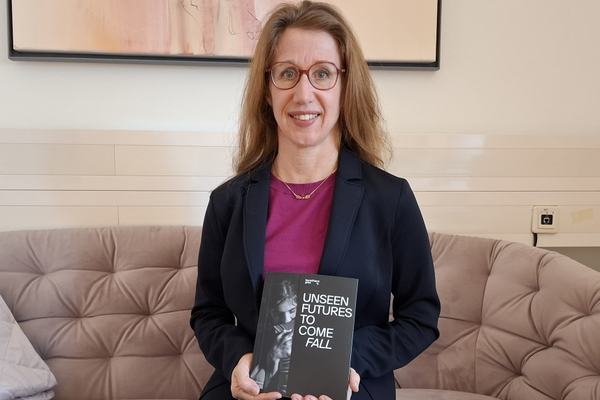
For those unfortunate enough to have missed English Studies Prof. Julia Hoydis’s literary tour of the Unseen Futures to Come. Fall exhibit in Kunsthaus Graz, here is a brief recapping of some intermedial highlights of the event titled “Narrative Moments.” Hoydis began her tour with the adage: “Kunst muss nichts, die Literatur muss nichts, sie kann aber einiges.” (“Art needs not do anything, literature needs not do anything, but either one can do a lot.”) Noting the power which comes from our granting attention to certain narratives over others, our tour started with the photograph Road to Nowhere (zweintopf, 2012/2025). Here, Hoydis introduced the general intermedial practice of being an artistic witness – not just needing art itself to be intermedial, but allowing a crossing of one’s tools of interpreting certain art forms. Presenting this mono-medial photograph with an ecocritical reading, our guide pointed out the common motifs of desolate roads and distant horizons. Even more could be said about the transmedial implications of this piece’s title for the Ozzy Osbourne fans out there.
Hoydis subsequently pointed out that, while the first installation and many of the pieces in the exhibit contained features which dystopian genres across the arts employ when discussing contemporary futures, some of the works offered a much-needed reprieve. The textile piece I Thought We Had More Time (Sophie Utikal, 2021) is one such installation. At this point in the tour, Hoydis brought our explicit attention to the TEXTures of the exhibit as a whole, inviting us to note the independent fragility and duration of assembly required of each piece which, in turn, offers a specific envisioning of “the” future. This approach encouraged viewers to understand the Unseen Future as a cacophony of these pieces rooted in the original Latin meaning of “textus,” inciting notions of weaving, constructing, and fitting together.
A prominent part of this tour as a polymedial experience was the selection of poems Hoydis recited as accompaniment to the visual installations, thus encouraging a multisensory engagement with the exhibition. After introducing the Fall: A Library of Twilight Worlds (Federico Campagna, 2025) installation – an innovative presentation of shelved books as an adjustable medium for visual artworks – Hoydis read for us the first part of T.S Eliot’s first quartet “Burnt Norton.” She noted the cyclical undertones of both pieces and their implicit dialogical relation while being “out of sync,” in the sense that one refers to fall, the other one to spring. The tour ended with Hoydis reading the final selected poem “Love in a Time of Climate Change” by Craig Santos Perez which, as the poet writes, recycles Pablo Neruda’s “Sonnet XVII” through adaptation. By bringing the visual arts into conversation with poetry, Hoydis demonstrated ways in which a multisensory approach to processing the exhibition’s thematic focus on possible futures could enhance audience engagement with individual works and the curatorial concepts of Unseen Futures to Come. Fall as a whole.
A catalogue of the exhibit has been published, in both English and German, which includes many pictures from the exhibition and contributions from scholars of art history, literary studies and philosophy: Federico Campagna, Julia Hoydis, Andreja Hribernik, Chus Martínez, Martin Grabner.
|
Bookshelf Offering
Matter, Marc, Henrik Wehmeier, and Clara Cosima Wolff, editors. Audioliterary Poetry between Performance and Mediatization/ Audioliterale Lyrik zwischen Performance und Mediatisierung, De Gruyter, 2024. https://doi.org/10.1515/9783111561356.
Audioliterary Poetry between Performance and Mediatization discusses the digital and performative aspects of the European and American contemporary poetry scene. This volume constitutes the proceedings of the 2023 homonymous conference promoted by the project Digital Poetry at the University of Hamburg and is composed of thirteen articles in German and English. The contributions provide original case studies on the complex interrelation of the “audioliterary,” indicating “works that are often written specifically to be performed” (3) with the accompaniment or support of specific media and technologies. The volume’s three sections address (1) performative and embodied poetical practices, (2) technological and digitized forms of poetry, and (3) poetry performances that are recorded, streamed, and shared on social media. Most of the contributions scrutinize performance and mediatization through the lens of “inter- and transdisciplinary research approaches” (1).
All contributions foreground the performative aspect of contemporary poetry. Mønster, Rustad and Schmidt, as well as Novak, indicate the importance of liveness and situatedness of poetry performances, pointing at the “poet-performer” theorized by Novak, and referring to Fischer-Lichte’s “autopoietic feedback loop” between performer and audience. Fisco and de Freitas focus on poetry slams in Italy and Brazil respectively, the first using frame analysis to discuss how poets and audience implicitly agree on the game-like format of poetry battles, and the latter considering poetry slams in peripheral areas of Brazilian towns as productive sites for the performance of citizenship, voicing the needs of typically silenced citizens. Wolff highlights instead the importance of performative elements in Deaf Poetry, claiming a space for it in literary studies.
In addition to the performative aspect of contemporary poetry, some articles explore the intertwining of the audioliterary with technologies and AI, focusing on intermedial poetry as well as human/machine entanglements, often referring to posthumanism and feminist theories. While Nachtergael attends to how gendered and racialized bodies and digital technologies affect each other in the French poetry context, Märten shows how the intermedial format of Gomringer’s German poetry corresponds to her attempt to destabilize the culturally dominant notion of victimhood attached to women. Keylin compares works produced by two AI-driven poetry generators and reflects on the opposing theories behind them.
The contributions on sharing poetry performances through mass media, streaming platforms, or social media convincingly situate poetry reception within popular culture. Gorbina, for instance, links the ironic sincerity of contemporary streamed poetry performances to the cultural theory of “metamodernism” (Vermeulen and Van den Akker) that suggests “the resurgence of affect” (200) as well as “activism and the creation of empathetic communities” (198). In relation to video streaming, Wehmeier argues that the “unprofessionalism” (245) and the “lossy reformatting” (239) that characterize even professionally-shot videos are part of the counterculture of poetry slams. Pfeiler traces the history of poetry mediatization in the UK, focusing on televised video clips and on the streaming of poetry slams on YouTube. She suggests that both practices contribute to the popularization of poetry. Articles by Gusella and Peeters and Lückl are devoted to performative practices mediated by Instagram, one of the most popular social media platforms at the moment.
|
|
|
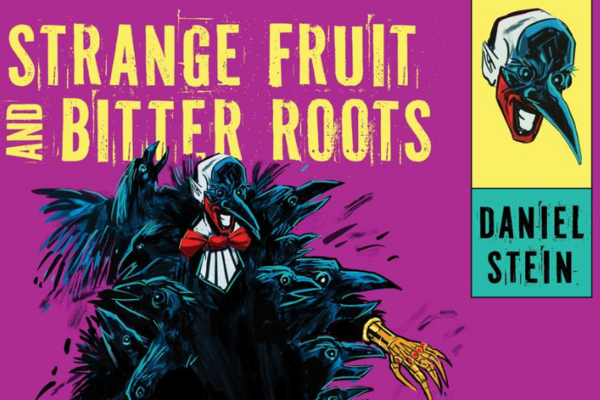
Stein, Daniel. Strange Fruit and Bitter Roots: Black History in Contemporary Graphic Narrative, University Press of Mississippi, 2026.
Since the 1990s, the graphic narrative format has made more frequent appearances in explorations of African American colonial and US histories. Becoming frontiers for enquiry into violent pasts and future visions, Daniel Stein’s scholarly approach to graphic stories and comics investigates how newly developed visual languages and techniques offer new perspectives on complex racial histories.
Delving into works by Ho Che Anderson, Tom Feelings, Kyle Baker, Ta-Nehisi Coates and Nnedi Okorafor, David Walker, Chuck Brown and Sanford Greene, John Jennings, Rebecca Hall, and Hugo Martínez amongst others, Stein elucidates the graphic narrative as a space where conversations about race and identity, and negotiations of established historical narratives take place in aesthetically unprecedented ways.
|
Intermediality Around Town
Diagonale Festival of Austrian Film
When: March 18 through 23, 2026
Where: Please see the program for further details.
What: Hosted every spring, the Austrian film festival Diagonale is a celebration of creativity and cinephile enthusiasm. It offers engagement in noncurated conversations about culture and cinema.
Digithalia
When: March 25 through 28, 2026, open from 18:00 – 22:00
Where: Schauspielhaus Graz
What: This four-day festival curated by F. Wiesel offering theater, games, films, installations, and concerts from various local and international artists, ensembles and performers. Digithalia embraces the blurring of today’s digital and corporeal landscape.
Modern Times
When: Multiple dates between May 20 and June 18, 2026
Where: Graz Oper
What: This three-part evening of dance presents works by three different choreographers who adapted Charlie Chaplin’s classic Modern Times. Reinterpreting the classic film and classical form of ballet, dance becomes a medium that seeks to convey different perspectives on the current meaning of “modern times.”
The Gate to Unreality – Michael Gülzow
When: Until March 29, 2026
Where: Kunsthaus Graz (lower level)
What: This meta video installation contests rigid boundaries between fiction and reality. Gülzow montages not only the material elements of this exhibition, but also plays with the seductiveness of construction and production in general. Have we surrendered too much in the way of competence in a “hypermedialized” world? For those keen on seeing more than the exhibit itself, Kunsthaus Graz is also offering an artist talk with Michael Gülzow and curator Martin Grabner from 11 a.m. to noon on March 21.
BLOOM
When: March 21 through November 8, 2026
Where: Kunsthaus Graz, Neue Galerie Graz, Natural History Museum, Schloss Trautenfels, Hunting Museum and Agriculture Museum, Schloss Stainz, Austrian Open-Air Museum Stübing, Folk Life Museum & Schloss Eggenberg
What: BLOOM comprises ten exhibitions with a shared theme: flowers. This bouquet of offerings invites visitors to explore variegated, culturally defined understandings of blooming plants. Whether they are seen as symbols, starting points for science, sources of myths or of colonial dominance, ‘Flowers are desired, loved and traded,’ as claimed on the website of Universalmuseum Joanneum. The exhibitions consist of sculptures, paintings, photography, acoustic performance, historical artefacts, and more. They, thus, invite visitors with an inter- and transmedial mindset to indulge in mediality-focused perceptions and interpretations.
|
From the Director’s Desk:
As the two reports in the rubric “CIMIG Voices” illustrate, the members of our advisory board continue to keep intermediality studies visible internationally. CIMIG members also look forward to attending the 8th biennial conference of the International Society for Intermediality Studies. This gathering, which will focus on “The Politics of Intermedial Connectivity,” will be held from May 27 through 29, 2026, at the Centre for Literary and Intermedial Crossings in Belgium and has been organized by yet another advisory board member: Assoc. Prof. Janine Hauthal. Briefly put, 2026 promises to be an exciting year for intermediality research—and the Intermediality Messenger will keep you posted.
Thank you for your interest!
Sincerely,
Nassim W. Balestrini
|
|
Universität Graz
Universitätsplatz 3
8010 Graz
|

|
|
|
|
|