|
No. 10
Donnerstag, 11. Juni 2026
|
|
The Intermediality Messenger: Newsletter of the Centre for Intermediality Studies in Graz (CIMIG)
Summer 2026
|
Dear Subscribers:
This spring, we were fortunate enough to welcome Prof. Vincenzo Maggitti (Universitá Roma Tre) as our Erasmus guest professor. Moreover, two CIMIG representatives gave talks and networked at the 8th biennial conference of the International Society for Intermediality Studies, held from May 27 through 29, 2026, at the Centre for Literary and Intermedial Crossings in Brussels, Belgium.
In this issue you will find an interview with Prof. Maggitti, book reviews, insights into Graz-based events that are of interest for intermediality studies, and a few closing remarks. We hope that you will enjoy all of the sections of this newsletter, that you will spread the word about the Intermediality Messenger, and that you will submit your questions or other inputs at cimig@uni-graz.at.
|
CIMIG and Erasmus
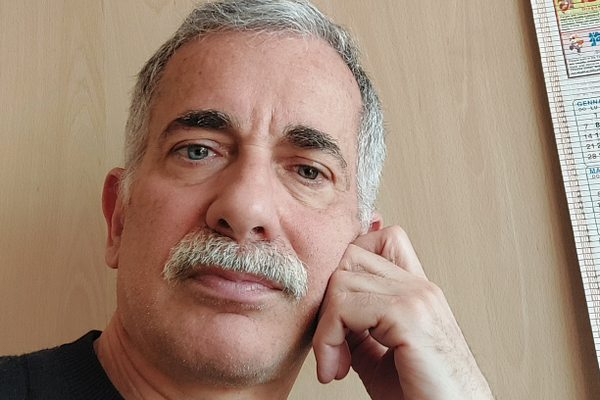
May 2026 began on a positive note at the Centre for Intermediality Studies and the Department of American Studies. Students and faculty members had the pleasure of welcoming Professor Vincenzo Maggitti from Università Roma Tre. Prof. Maggitti delighted students with two lectures centered on the productive intertwining of American movies and fiction, and met also with PhD students in the Doctoral Program “Visual Cultures and Intermediality.” In this meeting, the sparkling and wide-ranging discussion jumped from intermediality theory via corpus choices to the form of the dissertation, and ended with exciting reading and viewing suggestions. Prof. Maggitti’s first lecture titled “Dynamics of Memory and Dystopia in Paul Auster’s Man in the Dark,” presented a cinematic analysis of Paul Auster’s 2008 novel. Positing, through Magny’s theory of “the man in the dark room” and the film’s ghostly figuration, that the viewer is positioned within the suffering of the grieving protagonist. “Double Minstrel Show: Percival Everett’s Erasure and Spike Lee’s Bamboozled as Signifying Texts,” our guest’s second lecture, juxtaposed the two satirical takes (both of which resemble the mise-en-abyme technique) on the reproducing of exploitative and offensive concepts which lay at the core of nineteenth-century minstrel shows. Both protagonists come to realize that their own attempts at parodic adaptations of the minstrel show hinge on exploiting extreme caricatures of African American traits and behaviors. Following such enlightening encounters, students and professors eagerly await Professor Maggitti’s next visit to Graz. (AL)
|
|
|
CIMIG Voices: Vincenzo Maggitti
NB: It was a pleasure to welcome you to Graz in May. Thank you for contributing to the exchange program between our universities and to heightening the visibility of our shared interest in intermediality studies. Could you please briefly explain how your disciplinary background provided the basis for your interest in intermediality and which area(s) of intermediality research you find most intriguing?
VM: I was born and raised as a scholar of English Studies. As I entered my PhD in Comparative Literature and Literary Studies, I realized that I could fit my research on intermediality into one of the still scarcely populated disciplinary scaffolds about literature and visual arts, especially by focusing on cinema and film history. This reframing helped me to continue a research project that I had started when I was writing my thesis on the film adaptation of John Fowles’s novel The French Lieutenant’s Woman as a resourceful exception in the dialectical exchange between literature and cinema. This project inspired me to shift my interest toward the intermedial presence of cinema in literary works (novels and short stories). This presence does not necessarily match a thematic relevance of films in the plot structure but can play out against a background of cinematic texture in the compositional attitude of twentieth-century writers who were familiar with that kind of (audio)visual language.
NB: In a 2022 article on the TV series The Affair, you discuss the strategic use of intermedial reference in so-called “Complex TV.” Could you explain to our readers how TV genres/genre traditions have in recent years been struggling with techniques that are rather well-established in certain cinematic traditions? And what is the added benefit of thinking about this issue in a media-comparative way?
VM: TV series, particularly those developing quite intricate and multilayered plot dynamics (which define, ipso facto, complex TV), have provided a substitute/alternative for the novel, both in terms of reader satisfaction and of the ability to describe and interpret difficult and dire sociological, economic as well as gender troubles. This “competition” between literature and cinema has been quite beneficial in the intermedial dialogue as it allowed TV to fill a relevant role in the postmodernist reappraisal of self-reflexive modes of dealing with melodramatic and sentimental subject matter. In the case of The Affair, the presence of a main character who is a novelist breaks the traditional, melodramatic genre codes, as his writing intertwines with the unfolding of the plot so much that it seems to be responsible for the twists and turns in the plot development. So, this TV series becomes a paradigm for the literary and genre evolution of the televised medium, being simultaneously portrayed in their connection.
NB: This is fascinating. Thank you for this explanation. In 2023, you published an article (in Italian) about John Steinbeck’s use of Shakespeare in an experimental “play-novella” entitled The Moon Is Down (1942). How does Steinbeck employ Shakespearean forms and themes? Which intermedial facets of this text strike you as particularly worth discussing? If you like, you could also include your reading of John Lanchester’s 2019 novel The Wall, which you discuss in a 2024 essay.
VM: In both essays, on Steinbeck and on Lanchester, the relation with theater is crucial to the interpretive aim, so I’d rather discuss both within the same theoretical frame. When Steinbeck wrote The Moon is Down, he was experimenting with a genre that contained the intermedial connection within its very name: play-novella. Though not relevant for its literary legacy, the genre, anyway, was important in providing a new perspective on the theatricality of novel writing. In that case, the story of a fictional Nazi invasion, written primarily as a work commissioned for war propaganda, was patterned on the Shakespearean tragedy of Macbeth, aiming for the utmost paradigmatic expression of belligerent violence it could provide. The intermedial idea underlying the project was also that of writing a multimodal text which could be put on stage with minor changes but also be read as a narrative piece. However, the most original trait in The Moon is Down derives precisely from its not being a rewriting of the play but a reframing of the philosophical struggle between victim and pursuer—without any need for props and scenery recognizable as Shakespearean. The main vehicle for the reimagining of the original play is conceived by recurring dreams and nightmares as narrative devices as well as by foregrounding secondary characters, as in Shakespeare’s plays, that are reflectors of the horror portrayed in the story. In John Lanchester’s The Wall a similar issue of invasion is at the core of the novel, albeit coming from contemporary immigration-related themes, depicted in the disquieting island setting of a walled-in England. Through a retelling of Utopia as a foundational text of self-sufficient isolation, Lanchester enhances the theatrical features of More’s dialogues, envisaging a Shakespearean setting for the final encounter of the fugitive characters who are transformed into Others because of their military inefficiency as “guardians” of the Wall. The refuge furnished by a dismissed oil rig becomes the stage for an imagined post-colonial future not tainted by Brexit (never mentioned in the novel) and its aftermath.
NB: As a fellow Nabokovian, I’d be interested in how your thoughts about “film in literature” have developed since you first engaged with Vladimir Nabokov’s Kamera obskura (1931)/Laughter in the Dark (1935, 1938) and possibly also Otchayanie (1934)/Despair (1937)—that is, with novels that Nabokov wrote in Russian and that subsequently appeared in revised (and not just translated) versions in English.
VM: Nabokov was the first author that triggered the idea of studying cinema as a subtextual presence in literature, especially in his short stories. Here, the story entitled “The Assistant Producer” would be my top choice. There is also a short novel, called Soglyadataj (1930)/The Eye (1965), which is entirely centered on the cinematic perception of the protagonist. I haven’t read anything so far that could stand in for the subtlety of the cinematic inference of his writings, but I still try to find further connections, in the light of the invented films that his literary texts are replete with, interpreted as a necessity or unrestrainable urge from the writer to reveal what is actually in the intermedial texture of literature itself.
NB: Thank you so much for sharing your thoughts on such a broad range of primary texts on which you have already published. In closing, I would like to invite you to share which intermedial research project you are currently working on.
VM: I have been contemplating a project about the Hollywood novel as intermedial text, as the (sub)genre is sparsely the object of academic research. The focus would be multimodal since each text would be “told” through the eye of someone occupying a different job-position within the industrialized and capitalist system of Hollywood, from Nathanael West’s set designer in the Day of the Locust (1939) to F. Scott Fitzgerald’s screenplay writer in Pat Hobby Stories (1940). Another trajectory I would like to pursue is further analysis of persistent ekphrastic discourses in literature, as I am deeply entangled in this subject matter. Ekphrasis is a literary device whose expansion in intermedial studies has not been fully explored and which provides a resourceful tool in the discussion of film in literature. Lately I have been reading texts from Native Americans that combine auditive and visual ekphrasis in an original way.
NB: Thank you so much for your in-depth responses, which will hopefully inspire our readers to explore your publications and the areas of research you have sketched.
|
Bookshelf Offering
Blair, Lindsay & Camille Manfredi, eds. Intermedial Art Practices as Cultural Resilience. Routledge, Taylor & Francis Group, 2025. https://doi.org/10.4324/9781003412762
This volume was published as part of the Routledge Advances in Art and Visual Studies series, which seeks to collect targeted and innovative insights into contemporary research, theories, and practices about art. This edition focuses on “transmedialization,” which is the term that the editors use to describe transformations of traditional orality with hybrid and digital technologies. Centred upon examples from Scotland and Brittany, prominent discussions amongst the contributions in this collection relate to cultural definition, erasure, bordering, and restitution. As regions which have been institutionally excluded, they have become epicenters of national identity and cultural revivals engaging “in a cognate struggle to maintain their multiple identities” (1). Lindsay Blair and Camille Manfredi argue that “[t]hese cultures on the edge of Europe offer distinctive perspectives” on embracing “innovative hybrid art forms: a diversity of forms which celebrate their largely oral cultural heritage but re-imagined in a contemporary idiom” (3). The case studies in the volume accordingly demonstrate how cultural resilience can be expressed through intermedial art practices. Such an approach to resilience as a response to systematized silence follows the organic trajectory of survival through mutation and variation. Taking up these hybrid art forms, which Blair and Manfredi outline specifically in this collection to refer to “the photo-poem, the film-poem and variegated word/image/music configurations” (3), exemplifies adapting (in the biological sense) to the cultural conditions of the world as being the best means of ensuring survival. Art in this sense needs intermedial play, i.e., the crossing of medial breeds, in order to resist extinction. The contributors highlight this claim by positioning their analyses along geographical margins within which aesthetic concepts of between, inter, and across become much more potent. The twelve-essay collection contains three sections entitled “Film-Poetry and Cultural Resilience,” “Spaces, Places, History and Politics and Intermedial Practice,” and “Sonorous Landscapes.”
Dirschauer, Marlene et al., eds. Practising Piety: Spiritual Intermediality and Devotion in Early Modern Europe. Brill, 2026.
This volume strives to make Religious Studies more visible within intermediality scholarship, arguing that Christianity has an “intrinsically medial nature” from which a “surplus of spiritual values” arises. The editors claim that this “surplus” is a consequence of the interactions between multiple media forms used in Christianity’s quest for maximal propagation (4). The book defines as its starting point the distinction that spiritual intermediality is something separate from intermediality, whereby the religious medium as the in-between “between man and God” (5) is materially and fundamentally unanchored. Mediating between God and the people, it is argued, is an essentially intermedial task which stems from the human inability of divine communication. All attempts thus require “multiple media and mediators acting and interacting within” (7) this in-between/mediating space, and not all attempts succeed, some only serve “to acknowledge the gaping chasm between the inconceivability of God’s mediation” (12), while others come to test and extend “medial bounds and limitations” (14). Debates about the role of Christ himself as medium and mediator are analyzed in this volume, along with questions of what exists in what sense; the volume also contains analyses of believers’ desires and attempts at overcoming the mortal, “horizontal” level of conversation with a figure of God; includes commentary on the paragone debate where the word of God is placed above all else and yet the infallibility of that which is man-made is inescapable; and situates such intermedial instances historically in space and time. The volume invites one to wonder: In what way do such religious notions of mediation and mediality link up with aesthetic criteria of mediality, mediation, and the goal of achieving or implying immediacy? What happens when the boundary between the embodied source of mediated content is integrated into the discussion? One concern worth considering is whether such an approach runs the risk of negotiating levels of mediality that are not necessarily compatible. This risk is particularly salient because reinterpreting and stretching the term intermediality in ways that may only work in the context of the volume’s inquiry disallows its application elsewhere.
|
Intermediality Around Town
Styriarte 2026: Licht Spiele
When: June 26 through July 26, 2026
Where: various locations around Graz
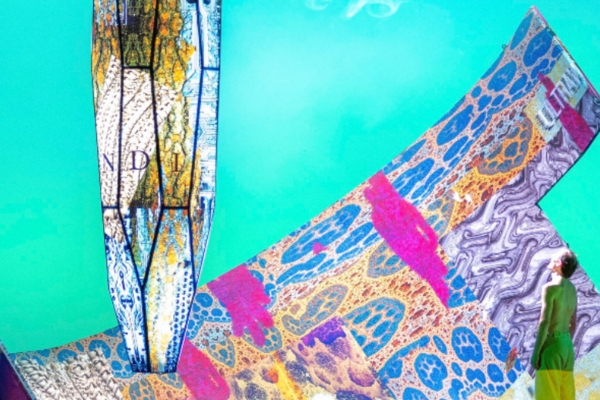
What: This 42nd rendition of the Styrian Festival is dedicated to the celebration of “the light that inspires and delights us.” It is a “grand festival of joie de vivre and hope” and a testament to the crucial role which music plays in providing a beacon for humanity. The festival connects the summer atmosphere to classical works from the Enlightenment period, jazz from the streets of New York in the “Roaring Twenties,” operetta performances from Graz’s own Robert Stolz, a new musical theater production Xoxchiyaoyotl, a new film soundtrack for the 1926 silent film Faust (Murnau), renditions of the soundtracks supporting Indiana Jones, Luke Skywalker, and Harry Potter as they “sav[e] the world and [defeat] the forces of darkness,” sound poetry, “hidden gems” of the Baroque, The Beatles, and so much more. Most of the events are offered multiple times throughout the festival period so be sure to look through the programme offered online, where tickets are also available for purchase with offered discounts. On the last day of the festival (July 26) you can even experience, for free, a sunrise performance on Schöckl. (quotes taken from the programme overview)
La Strada
When: July 31 through August 8, 2026
Where: Hauptplatz
What: A “cross-disciplinary festival, embracing the rich diversity of artistic forms and formats.” The city is the stage in this street art festival connecting people and performance in their own spaces. Dealing with complex and contemporary issues “with playful seriousness and serious play.” The festival’s headliner is the Collectif XY, a French acrobatic group from the Möbius production, combining acrobatics, dance, and poetry to create an idiomatic choreographic language to push boundaries. (Quotes taken from the La Strada graz webpage about section)
|
|
From the Director’s Desk:
|
|
|
When Anna Lorenzon, who is currently in her second semester of working on her PhD at CIMIG, and I presented papers and networked with colleagues from numerous countries at the intermediality studies conference in Brussels last month, we were delighted by the interdisciplinary research community that gathered for the biennial conference. The keynotes covered much ground, as they contemplated the crucial role that intermedial concerns can play in, for instance, narratology, memory studies, film studies, and video-game studies. Meeting colleagues from intermediality centers in Belgium (Vrije Universiteit Brussels and UC Louvain), Sweden, and Brazil as well as colleagues from various disciplines who contribute to intermediality studies in their respective fields was a powerful reminder of why CIMIG is determined to expand its efforts and visibility.
As this is our second and thus last newsletter this semester, I would like to thank Lisa Niedermayr, who has served as CIMIG’s research assistant since September 2024, for her highly appreciated input and wish her all the best for her future career—be it in research, in the arts, or wherever else.
Thank you for your interest in the Intermediality Newsletter. You will hear from CIMIG again after the summer break.
Sincerely,
Nassim W. Balestrini
|
|
Universität Graz
Universitätsplatz 3
8010 Graz
|

|
|
|
|
|