Francy Baniwa
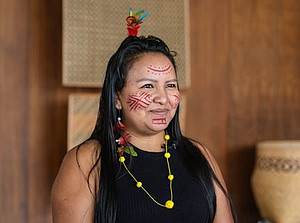
Francy Baniwa is an Indigenous scholar from the Baniwa people, born in the community of Assunção in the Upper Negro River. She is an anthropologist and photographer, with a PhD in Social Anthropology from the Museu Nacional of the Federal University of Rio de Janeiro. The first Brazilian Indigenous woman to publish an academic book in Anthropology, Francy Baniwa coordinates the international project “Safeguarding Cross-border Indigenous Languages,” supported by by UNESCO and the National Museum of Indigenous Peoples in Brazil. She is currently the Chair “Olavo Setubal of Art, Culture, and Science” at the Institute of Advanced Studies of the University of São Paulo (USP) and Coordinator of the Baniwa Living School, titled: Wanheke Ipanana wha Walimanai: Knowledge House of the New Generation, in the community of Assunção do rio Içana.
Gabriele Berg
Gabriele Berg studied biology, ecology and biotechnology at the universities in Rostock and Greifswald (Germany), and obtained her Ph.D. in 1995 in microbiology from Rostock University. In 2005 she became a full professor in environmental biotechnology at Graz University of Technology (Austria), and in 2021 an additional professorship in Potsdam together with a position at Leibniz ATB (Germany). Since 2025 she has been a Max Planck fellow.
Her interests are focused on microbiome research and translation of the results into new biotechnological concepts for health issues. Her main contributions include many key facts related to the plant microbiome and food-gut axis. in addition, she is one of the international drivers of the interdisciplinary field of microbiome biotechnology. She belongs to the most cited researchers worldwide and received several awards. She has been vice-president of the ISME Society since 2024.

Paola Esposito
Paola Esposito is a Departmental Lecturer in Visual, Material and Museum Anthropology at the Institute of Social & Cultural Anthropology, University of Oxford, where she also convenes the Anthropology-Art Collective, fostering interdisciplinary dialogue between anthropology and the arts. Her work lies at the intersection of visual and medical anthropology, with a particular focus on the relationship between sensory perception and imagination, as mediated by techniques and devices, and on the reconfiguring of the lived body through aesthetic, therapeutic and medical practices. Paola’s doctoral research centred on long-term, multi-sited ethnographic fieldwork with practitioners of butoh, a Japanese-transnational dance and somatic movement genre, examining how butoh’s reported formlessness and indeterminacy are negotiated in practice. Over the years, Paola has worked with performers, theatre-makers, artists and skilled practitioners from diverse disciplinary backgrounds. Her current research engages with notions of bodily knowing, imagination, and transformation, and mobilises graphic, audio-visual and performance-based approaches, contributing to multimodal anthropology.
Courtney E. Mohler
Courtney Elkin Mohler (Santa Barbara Chumash) joined the faculty of Boston College as an Associate Professor of Theatre in Fall 2022 where she directs shows for the department, heads the Directing Program and teaches courses in BIPOC Theatre, Native American Theatre, and Critical Studies in Theatre. Mohler holds a Ph.D. in Critical Studies in Theater from UCLA and serves as the Secretary for the premiere professional organization, Association for Theatre in Higher Education.
As a stage director and dramaturg, Mohler concentrates on new works that push aesthetic and political boundaries aimed at affecting a more equitable world and is dedicated to supporting new work by Native American playwrights. Some recent professional dramaturgy credits: Pure Native by Vickie Ramirez at Geva Theatre in Rochester, NY, Antíkoni by Beth Piatote at Native Voices in Los Angeles, CA, Desert Stories for Lost Girls by Lily Rushing at Latino Theatre Company/Native Voices, and The Thanksgiving Play by Larissa FastHorse at the Virginia Stage Company.
She has published articles in Theatre Topics, Modern Drama, Text and Presentation, Platform, and Ecumenica, and has contributed chapters to numerous edited anthologies. Mohler also co-authored Critical Companion to Native American and First Nations Theatre and Performance: Indigenous Spaces with Christy Stanlake and Jaye T. Darby 2020 Bloomsbury-Metheun Press, and co-edited the forthcoming Methuen Anthology of Native American Plays: Indigenous Spaces, with Christy Stanlake which will feature new works by Larissa FastHorse, Muriel Miguel, Mary Kathryn Nagle, and Randy Reinholz, among others.
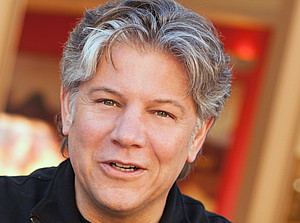
Randy Reinholz
Randy Reinholz, an enrolled member of the Choctaw Nation of Oklahoma, is Founding Artistic Director Emeritus of Native Voices at the Autry, the nation’s premier Equity theater company dedicated exclusively to developing and producing new plays by Native American, Alaska Native, Native Hawaiian, and First Nations playwrights.
Reinholz is an accomplished producer, director, playwright, actor, and activist. His play Off The Rails, directed by Bill Rauch, had its world premiere and a sold-out run at the Oregon Shakespeare Festival. He has several new scripts and media projects in development. He has produced more than 35 new scripts and directed over 75 plays in the United States, Australia, Mexico, Great Britain, and Canada. Under his tenure, Native Voices has presented 300 workshops and presentations of Native plays, with artists from more than 100 distinct tribal nations.
Some of Reinholz’s favorite productions were at Geva Theatre, La Jolla Playhouse, Perseverance Theatre, Smithsonian National Museum of the American Indian, New York, and Washington D.C., Arena Stage, Idaho Rep, New York’s Public Theater, and the Autry Museum, Los Angeles.
Reinholz has received numerous highly prestigious awards and fellowships. He was the President of the National Theater Conference, is a trustee of the College of Fellows of the American Theatre, and is on the National Advisory Board for the Valdez Last Frontier Theatre Conference. He served on the Los Angeles County, Cultural Equity and Inclusion Initiative Advisory Committee, and ATHE’s National Leadership Institute. Reinholz is a tenured Professor at San Diego State University, where he also served as Director of the School of Theatre, Television, and Film.
He has also appeared as an actor on many stages across the country as well as on NBC, ABC, and CBS Television.
Website: www.RandyReinholz.com
Dylan Robinson
Dylan Robinson is a xwélmexw (Stó:lō/Skwah First Nation member) artist, curator, and writer. Based at the University of British Columbia’s School of Music, he is a Professor and Associate Dean Equity. Dr. Robinson’s curatorial work includes the international touring exhibition Soundings (2019—25) co-curated with Candice Hopkins. His current book project focuses on non-human forms of interpellation, and in particular, the role that public art and civic infrastructure play in formations of settler subjectivity and Indigenous resurgence.
Robinson’s publications includes Hungry Listening (University Minnesota Press, 2020), that examines Indigenous and settler-colonial practices of listening, and received awards from the Native American and Indigenous Studies Association, the Society and Society for Music Theory and Canadian Association for Theatre Research. Other publications include the edited volumes Music and Modernity Among Indigenous Peoples of North America (Wesleyan University Press, 2019); and Arts of Engagement: Taking Aesthetic Action in and beyond the Truth and Reconciliation Commission of Canada (Wilfrid Laurier University Press, 2016).