

Beginn des Seitenbereichs:
Seitenbereiche:

  • Zum Inhalt (Zugriffstaste 1)
  • Zur Positionsanzeige (Zugriffstaste 2)
  • Zur Hauptnavigation (Zugriffstaste 3)
  • Zur Unternavigation (Zugriffstaste 4)
  • Zu den Zusatzinformationen (Zugriffstaste 5)
  • Zu den Seiteneinstellungen (Benutzer/Sprache) (Zugriffstaste 8)
  • Zur Suche (Zugriffstaste 9)

Ende dieses Seitenbereichs. Zur Übersicht der Seitenbereiche

Beginn des Seitenbereichs:
Seiteneinstellungen:

Deutsch de
English en
Suche
Anmelden

Ende dieses Seitenbereichs. Zur Übersicht der Seitenbereiche

Beginn des Seitenbereichs:
Suche:

Suche nach Details rund um die Uni Graz
Schließen

Ende dieses Seitenbereichs. Zur Übersicht der Seitenbereiche


Suchen

Beginn des Seitenbereichs:
Hauptnavigation:

Seitennavigation:

  • Universität

    Universität
    • Die Uni Graz im Portrait
    • Organisation
    • Strategie und Qualität
    • Fakultäten
    • Universitätsbibliothek
    • Jobs
    • Campus
    Lösungen für die Welt von morgen entwickeln – das ist unsere Mission. Unsere Studierenden und unsere Forscher:innen stellen sich den großen Herausforderungen der Gesellschaft und tragen das Wissen hinaus.
  • Forschungsprofil

    Forschungsprofil
    • Unsere Expertise
    • Forschungsfragen
    • Forschungsportal
    • Forschung fördern
    • Forschungstransfer
    • Ethik in der Forschung
    • Kommission für wissenschaftliche Integrität
    Wissenschaftliche Exzellenz und Mut, neue Wege zu gehen. Forschung an der Universität Graz schafft die Grundlagen dafür, die Zukunft lebenswert zu gestalten.
  • Studium

    Studium
    • Studieninteressierte
    • Infos für Studierende
    • Anmeldung zum Studium (Wintersemester 2026/27)
  • Community

    Community
    • International
    • Am Standort
    • Forschung und Wirtschaft
    • Absolvent:innen
    Die Universität Graz ist Drehscheibe für internationale Forschung, Vernetzung von Wissenschaft und Wirtschaft sowie für Austausch und Kooperation in den Bereichen Studium und Lehre.
Jetzt aktuell
  • Jetzt zum Studium anmelden
  • Jetzt die "Youni"-App holen
  • Klimaneutrale Uni Graz
  • Forscher:innen gefragt
  • Arbeitgeberin Uni Graz
Menüband schließen

Ende dieses Seitenbereichs. Zur Übersicht der Seitenbereiche

Beginn des Seitenbereichs:
Sie befinden sich hier:

Universität Graz Geisteswissenschaftliche Fakultät Zentrum für Intermedialität in Graz (CIMIG) Neuigkeiten REGISTER NOW: “A Relational World?” – Interdisciplinary Conference/Festival
  • Über das Zentrum
  • Persönlichkeiten
  • Unsere Forschung
  • Studienservice
  • Relational World
  • Neuigkeiten

Ende dieses Seitenbereichs. Zur Übersicht der Seitenbereiche

Donnerstag, 09.07.2026

REGISTER NOW: “A Relational World?” – Interdisciplinary Conference/Festival

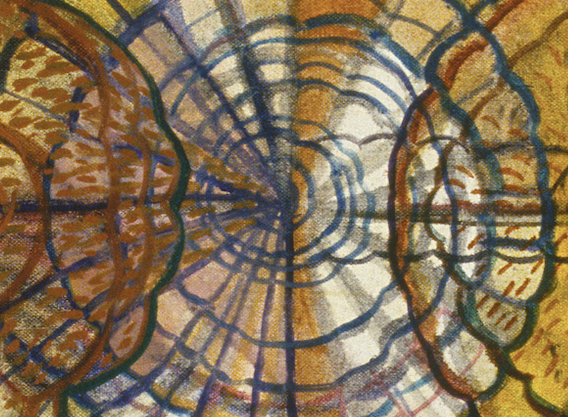
Tagung ©Michele Feder-Nadoff
©Michele Feder-Nadoff

Organized by the Department of Cultural Anthropology and European Ethnology,

the Centre for Intermediality Studies in Graz (CIMIG) and

the Botanical Garden (Institute for Biology) of the University of Graz


University of Graz

October 29–31, 2026

The world is currently facing multiple emergencies: social, humanitarian, and environmental. How these are perceived affects how they are studied and therefore how they are addressed with possible solutions in mind. Indeed, particular perceptions of the world also shaped how such current crises came about in the first place. This is because the different ways humans perceive the world play a pivotal role in what action is taken. There has been a gradual shift across various academic disciplines towards perceiving the world as constituted by emergent relations rather than fixed laws. For instance, the physicist David Bohm in the 1980s described two world views: explicate and implicate. In the mainstream scientific view of reality, all things are envisaged as having discreet boundaries. This is what Bohm describes as an explicate order. In an explicate order relationships do not affect an entity’s fundamental constitution, whereas, in an implicate order, everything is constituted through multiple, ongoing and always changing relations. Based on their cosmologies and in light of their historical experience of violent oppression, numerous Indigenous scholars, artists, and activists, such as Gregory Cajete, Manulani Aluli-Meyer, Joy Harjo, Bispos dos Santos, and Kyle Whyte, have become increasingly visible in showing how their ancestral onto/epistemologies envisage the world as relational in different ways. In other contexts, environmental activists and ecologists have long argued for relational understandings of the world. Processual and relational perspectives have been thoroughly theorized in philosophy (e.g., Deleuze, Guattari, and Haraway) and in contemporary music (e.g., John Cage; Raven Chacon). In biology, attention to ontogenetic development has led to increasing studies in epigenetics and the ways in which evolutionary processes are affected by experiences and behaviour of beings during their lives, not only in reproductive processes. Most recently, biologists and medical researchers are increasingly finding evidence of the relationship between gut microbiomes, soil and food microbiomes and how these can work towards the prevention of biodiversity loss and the improvement of neurological conditions. As these examples demonstrate, historically as well as today, scholars have argued that perception itself can be understood as a relational process of mutual constitution between the thing perceived and the perceiver (e.g., Ingold and Goethe). In other words, the relationship between knower and known shapes both. What these approaches show is that understanding the world from such relational perspectives can have far-reaching consequences for understanding how to address contemporary issues.

Further information about the conference can be found here: https://intermediality-centre.uni-graz.at/de/relational-world/

Click here to register: https://intermediality-centre.uni-graz.at/de/relational-world/information-on-the-conference/

We are looking forward to welcoming you in October!

Weitere Artikel

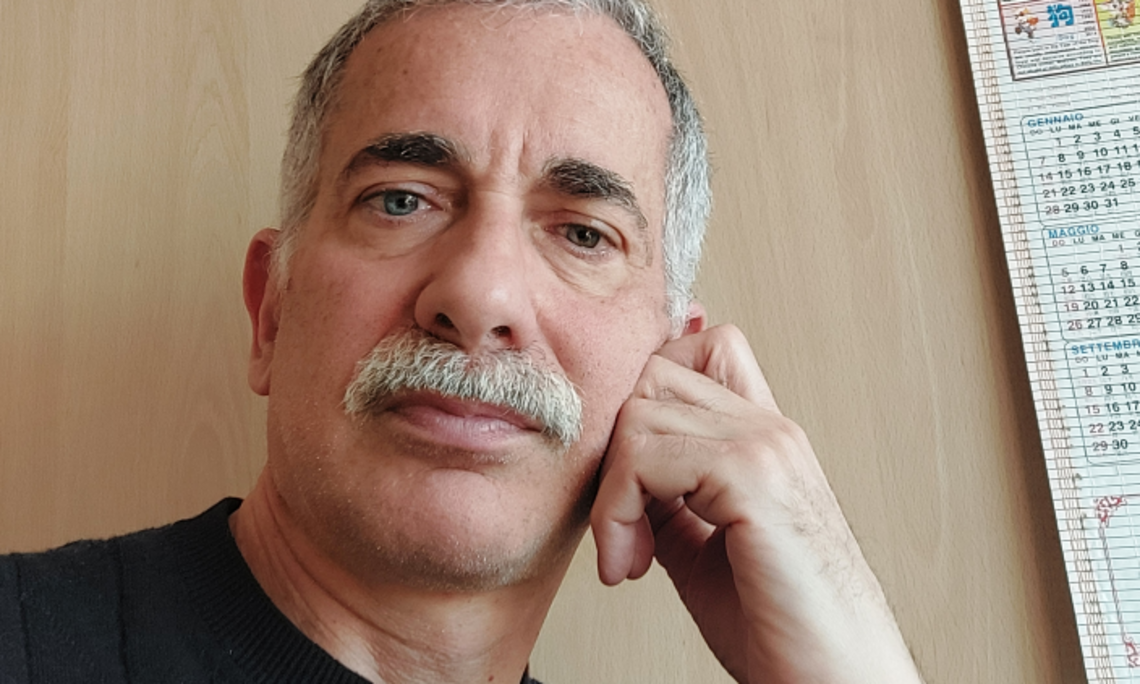
Erasmus Rome—Graz: Vincenzo Maggitti

JLIC: Call for Abstracts!

Open Call – Journal for Literary and Intermedial Crossings Deadline for abstracts: 15 August 2026

Erasmus Guest Lectures

Vincenzo Maggitti (Universitá Roma Tre) Dates: May 5 & 6, 2026 | Time: 11:45 a.m.–1:15 p.m. | Place: HS 34.K1, Attemsgasse 25/Basement, 8010 Graz Volker Depkat (University of Regensburg) Dates: May 19 & 20, 2026 | Time: 11:45 a.m.–1:15 p.m. | Place: HS 34.K1, Attemsgasse 25/Basement, 8010 Graz

CFP: A Relational World?

Shifting perceptions of the world in a time of planetary emergencies An interdisciplinary interactive festival/conference Thursday, 29th – Saturday, 31st October 2026 University of Graz

Beginn des Seitenbereichs:
Zusatzinformationen:

Universität Graz
Universitätsplatz 3
8010 Graz
  • Anfahrt und Kontakt
  • Kommunikation und Öffentlichkeitsarbeit
  • Moodle
  • UNIGRAZonline
  • Impressum
  • Datenschutzerklärung
  • Cookie-Einstellungen
  • Barrierefreiheitserklärung
Wetterstation
Uni Graz

Ende dieses Seitenbereichs. Zur Übersicht der Seitenbereiche

Ende dieses Seitenbereichs. Zur Übersicht der Seitenbereiche

Beginn des Seitenbereichs:

Ende dieses Seitenbereichs. Zur Übersicht der Seitenbereiche